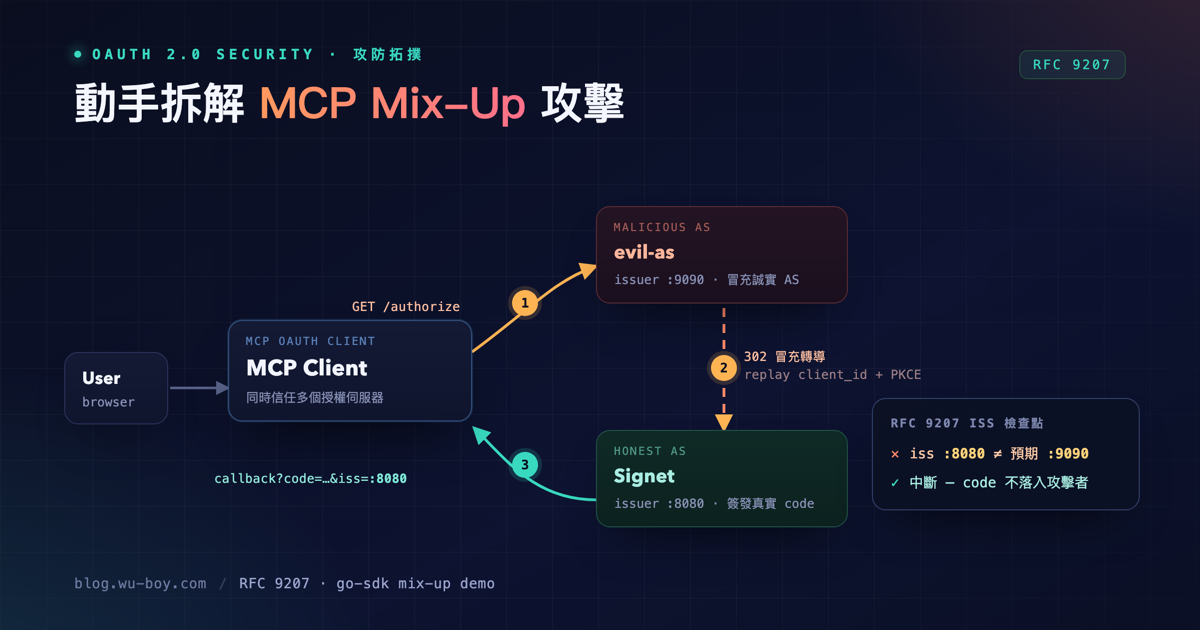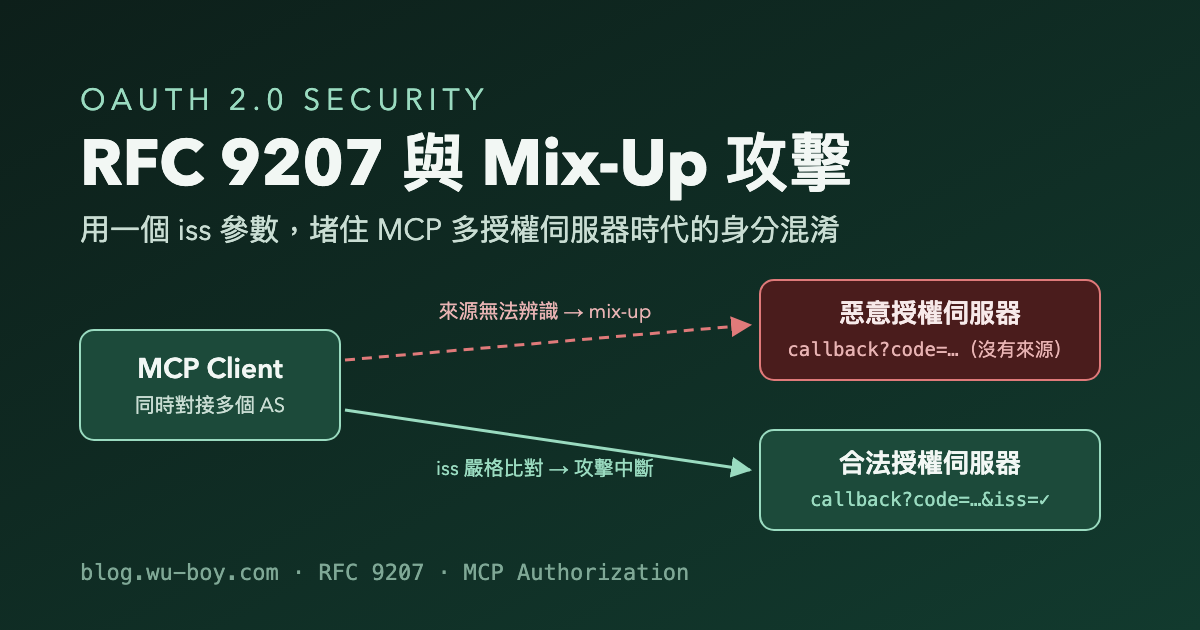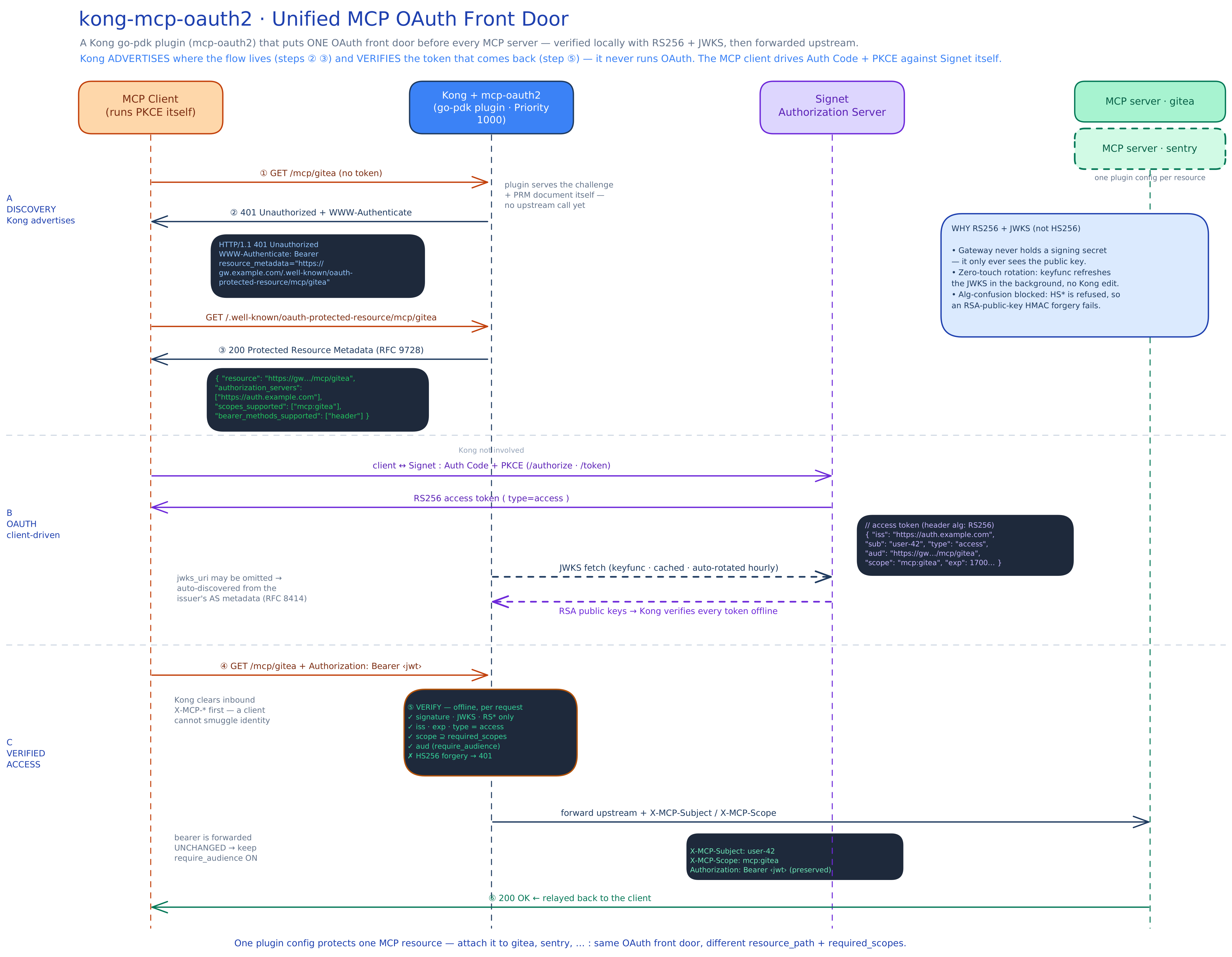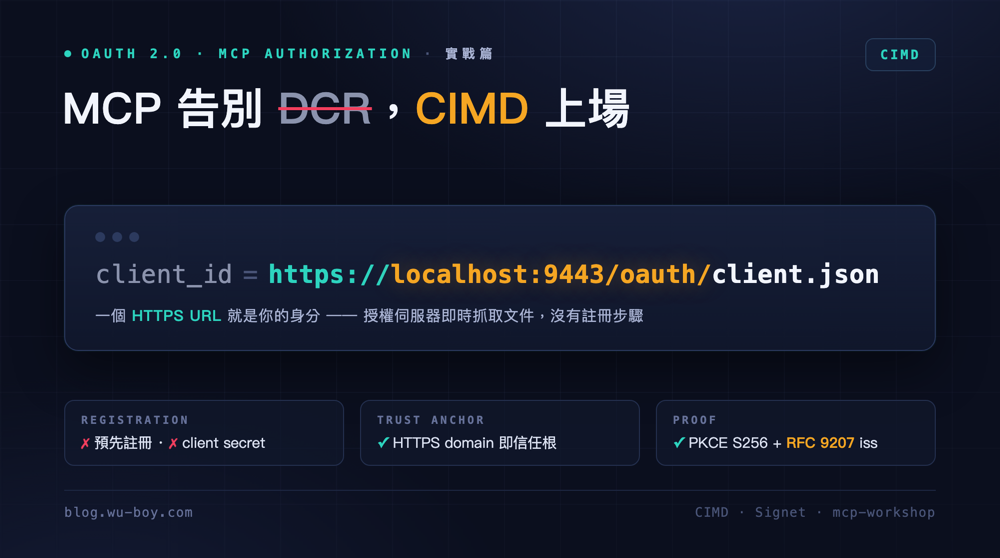
In the 2026-07-28 Authorization spec announcement, MCP shipped a batch of authorization-hardening changes in one go: RFC 9207 issuer validation is now mandatory, client credentials are bound to the issuer that minted them (no reuse across authorization servers), and — the headline item — Dynamic Client Registration (DCR) is formally deprecated in favor of CIMD (Client ID Metadata Documents). DCR stays functional for backward compatibility for at least 12 months, but the direction is set: a future version will remove it.
Half a year ago I wrote Introduction to OAuth Client ID Metadata Document (CIMD), covering the three pain points CIMD solves (pre-registration doesn’t scale, DCR’s unbounded client database and self-asserted trust problem, and MCP’s “no pre-existing relationship” scenario). That was the concept piece; now that the spec has put CIMD front and center, it’s time for the hands-on companion — running a complete CIMD authorization flow end to end, watching an HTTPS URL travel all the way into the client_id claim of an access token.
This post takes apart the 03-oauth-mcp/cimd sample from go-training/mcp-workshop: two runnable Go programs (cimd-client, cimd-server) with Signet as the authorization server — from minting a local certificate with mkcert, publishing the client metadata document, Authorization Code + PKCE, RFC 9207 iss validation, to finally calling the MCP who_am_i tool with a Bearer token. And as a bonus: swapping the OAuth client for Claude Code itself, logging in against the CIMD URL with claude mcp add.